if i can just find someone with a lazer to remove this swasticka from my arm...
Just leave it and tell people you are old skool greco-roman, especially if you visit germany. Im sure it will go down ok.
Greco-Roman antiquity
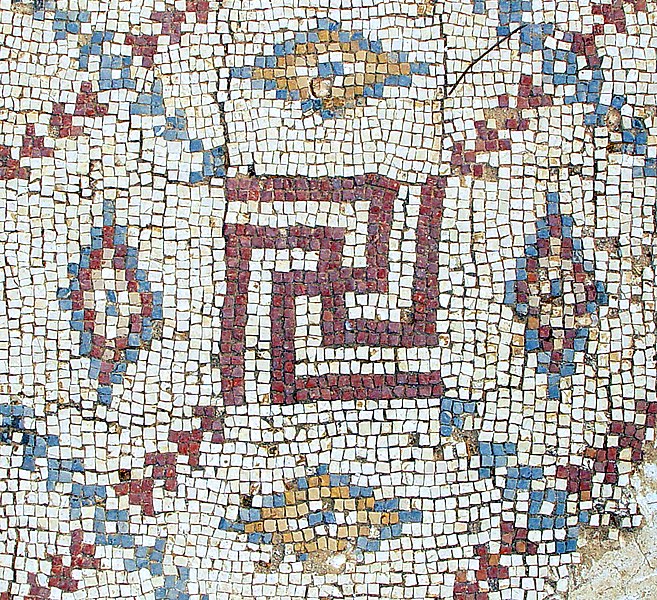
Ancient Greek architectural, clothing and coin designs are replete with single or interlinking swastika motifs. There are also found gold plate fibulae from the 8th century BC decorated with an engraved swastika.[34] Related symbols in classical Western architecture include the cross, the three-legged triskele or triskelion and the rounded lauburu.
The swastika symbol is also known in these contexts by a number of names, especially gammadion,[35] or rather the tetra-gammadion. The name gammadion comes from the fact that it can be seen as being made up of four Greek gamma (Γ) letters.
Ancient Greek priestesses would tattoo the symbol, along with the tetraskelion, on their bodies. Ancient Greek architectural designs are replete with the interlinking symbol.
In alchemy, the gammadion was used to symbolise the four cardinal corners of the world and the guardianship of this world.
The swastika often represented perpetual motion, reflecting the design of a rotating windmill or watermill. A meander of connected swastikas makes up the large band that surrounds the Augustan Ara Pacis. A design of interlocking swastikas is one of several tessellations on the floor of the cathedral of Amiens, France.[36] A border of linked swastikas was a common Roman architectural motif,[37] and can be seen in more recent buildings as a neoclassical element.
A swastika border is one form of meander, and the individual swastikas in such a border are sometimes called Greek keys. There have also been swastikas found on the floors of Pompeii.[38]
en.wikipedia.org/wiki/Swastika