
-
9-11 Eleven Years Later
-
these engineers and architects are pretty dumb if they cant work the real 911 truth out....they should ...
-
-
China's Air Pollution Behind Erratic Weather in the U.S., say Climatologists
-
Coal is dirty, but what happens to Australia if Chinese consumption falls.

-
-
Community Chat Room Poll
-
I get the impression this chat will start ringing like crazy

-
-
UK Column Live 9th July 2012
-
as activist for ukip and supporter of uk column having passed around 100,000 copys of this paper ...
-
Latest Comments
West Coast Residents: Dead Men Walking From Fukushima Radiation


- Details
- Created on Saturday, 22 February 2014 21:18
- Written by marina
- Hits: 1469

"When the West Coast finally understands the danger they are in, there will be a 'panic exodus' that's unimaginable!"
The media almost complacently reports yet another 100 tons of radioactive water has leaked from a holding tank at Fukushima, this is in addition to the hundreds of tons pouring into the Pacific ocean daily.
READ MORE: West Coast Residents: Dead Men Walking From Fukushima Radiation - BEFORE IT'S NEWS
Immense Freshwater Reserves Discovered Beneath Ocean Floor
- Details
- Created on Thursday, 20 February 2014 10:31
- Written by marina
- Hits: 1211
 Scientists have discovered a massive reserve of freshwater trapped beneath the seabed that could provide water to the world's coastal cities and mitigate the impact of a looming global water crisis, according to a new study.
The study first reported in the journal Nature describes an estimated half-a-million cubic kilometers of low-salinity water buried in undersea aquifers off the coasts of Australia, China, North America and South Africa.
"The volume of this water resource is a hundred times greater than the amount we've extracted from the Earth's sub-surface in the past century since 1900," the study's lead author Dr. Vincent Post said, according to Science Daily. "Knowing about these reserves is great news because this volume of water could sustain some regions for decades."
The undersea reserves have the potential to alleviate the impacts of freshwater scarcity on the planet, Post said, but the resource should be treated with care. Offshore oil and gas exploration or carbon sequestration activities could contaminate the aquifers, which are themselves a limited resource.
"We should use them carefully," Post said "Once gone, they won't be replenished until the sea level drops again, which is not likely to happen for a very long time."
READ MORE: Immense Freshwater Reserves Discovered Beneath Ocean Floor
Canal carved through Nicaragua will destroy rainforests, communities and wildlife
- Details
- Created on Wednesday, 19 February 2014 20:05
- Written by marina
- Hits: 1312

The Nicaraguan government has granted a concession to a mysterious Chinese company owned by Jing Wang, a little-known Hong-Kong based businessman, to build an inter-oceanic canal. This would provide an alternative to the Panama Canal that, 99 years after it first opened, is struggling to cope with shipping.
Despite being one of the most important decisions in Nicaragua's history, the legislative bill in question appeared virtually overnight and was approved as law only three days after it was sent to the parliament, with no serious national consultation or opportunity to hear the opposition from some of the country's leading scientists.
The company is the Hong Kong Nicaraguan Development Group (HKND), which has no experience with major construction projects. With an estimated cost of US$40 billion, the canal was slated to start in June 2014, but has been delayed to the end of the year
The Nicaraguan government claims the project will pull the country, in which 45% of the population live on less than US$2 day, out of poverty. But so far no feasibility studies have been revealed, and serious economists have expressed their concern that the canal will just be another enclave economy as it was for Panama. Because this private canal will not be a property of Nicaragua for 100 years, and since it will not be linked to the rest of the economy, it will not create wealth nor will it improve Nicaragua's economy.
Around 300km of excavations will be required to connect the Pacific Ocean to the Caribbean – three times the length of the Panama Canal. Along the route it will traverse Lake Nicaragua, the largest drinking water reservoir in the region, and cut through rainforests and ecologically valuable swamps.
READ MORE: Canal carved through Nicaragua will destroy rainforests, communities and wildlife
Huge Asteroid to Fly Safely By Earth Monday
- Details
- Created on Sunday, 16 February 2014 23:30
- Written by marina
- Hits: 1478
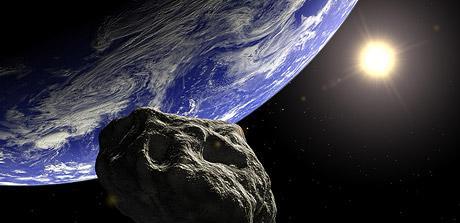 An asteroid the size of three football fields is set to make a close brush of Earth on Monday (Feb. 17), and you can watch the flyby in a live webcast.
Near-Earth asteroid 2000 EM26 poses no threat of actually hitting the planet, but the online Slooh Space Camera will track the asteroid as it passes by Earth on Monday. The live Slooh webcast will start at 9 p.m. EST (0200 Feb. 18 GMT), and you can also watch the webcast directly through the Slooh website.
You can also watch the asteroid broadcast live on Space.com. Scientists estimate that 2000 EM26 is about 885 feet (270 meters) in diameter, and it is whizzing through the solar system at a break-neck 27,000 mph (12.37km/s), according to Slooh. During its closest approach, the asteroid will fly about 8.8 lunar distances from Earth.
READ MORE: Huge Asteroid to Fly Safely By Earth Monday: Watch It Live